
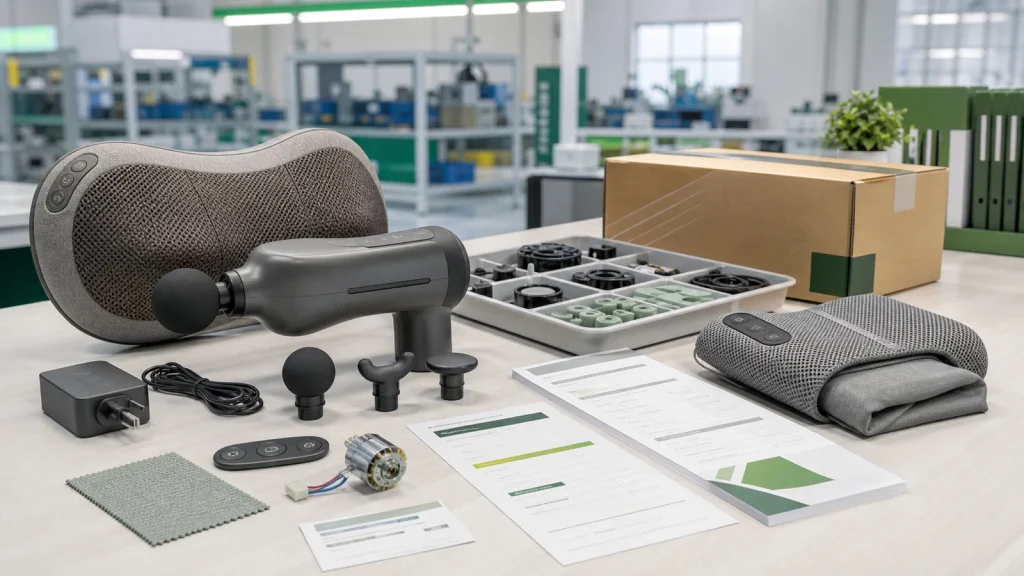
After-Sales Support Guide
Warranty terms and spare parts should be planned before shipment, not after complaints arrive. This guide helps buyers protect margin and keep service cases measurable.
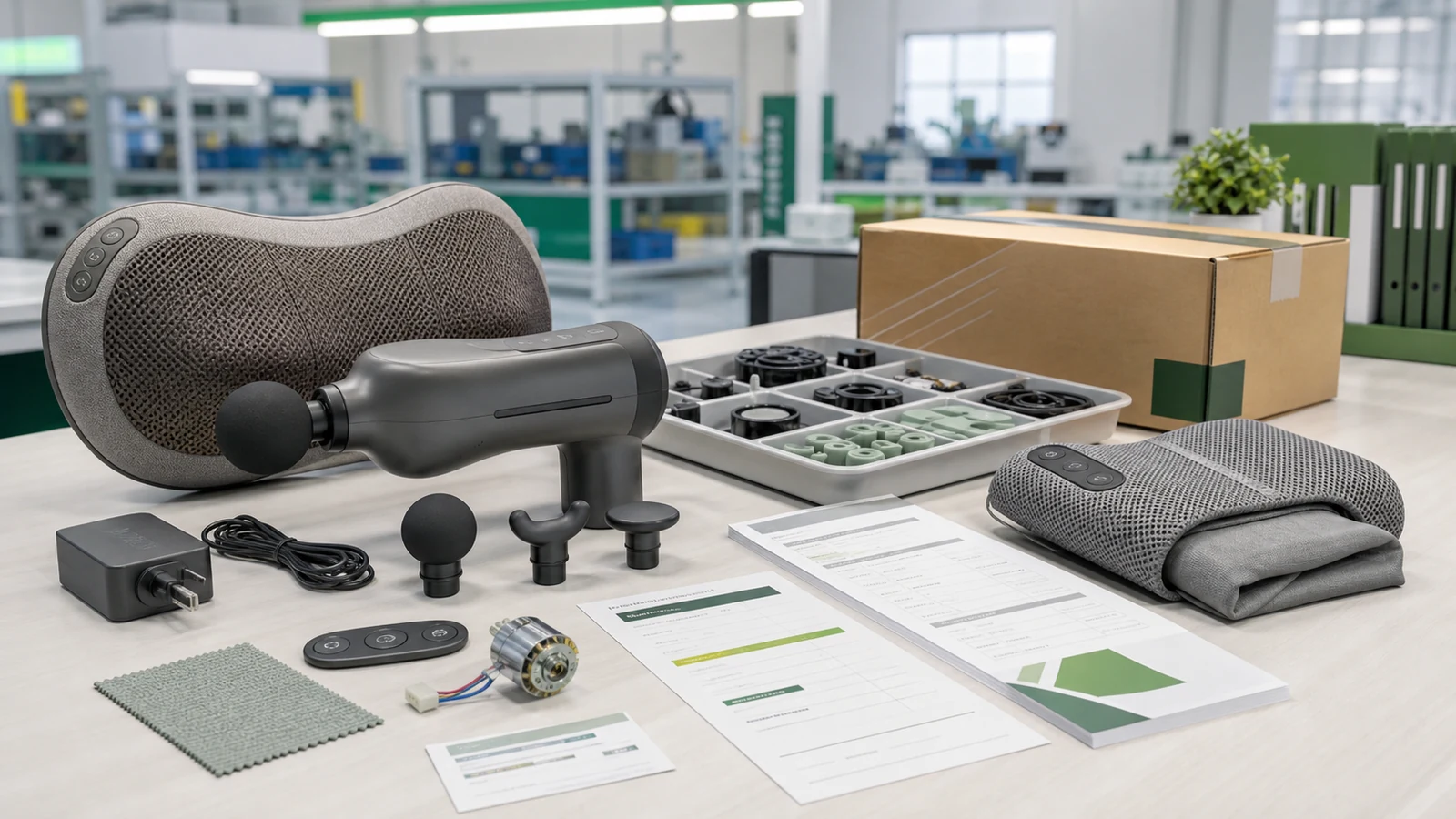
Massage device warranty and spare parts planning is not just an after-sales topic. For a wholesale buyer, it affects product margin, customer reviews, distributor confidence and the real cost of keeping a product line alive after the first shipment.
Many buyers discuss warranty only after a complaint arrives. That is late. A better approach is to agree on the service structure before shipment: what counts as a defect, what evidence is needed, which parts can be replaced, who pays for replacements, and how repeated issues will be fed back into the next production run.
Why after-sales planning protects wholesale margin
A low factory price can disappear quickly when the buyer has to refund customers, ship replacement units, handle unclear complaints or hold unsellable stock. Warranty and spare parts planning helps the buyer estimate that cost before choosing a product and placing the order.
This is especially important for massage devices because customer experience is physical. A weak heat feeling, noisy motor, uncomfortable fit, missing cable or confusing control panel may become a return even if the product still powers on. Buyers should therefore connect after-sales terms with product selection, sample approval, packaging and quality inspection.
The discussion should begin before production. The Massage Device Sample Approval guide explains how the approved sample becomes the reference point for product expectations. The warranty agreement should use that same reference instead of vague words like “normal quality” or “factory standard.”
Start with a clear defect definition
Before shipment, the buyer and factory should agree which issues are treated as confirmed defects, which issues require further checking, and which issues are caused by channel handling, misuse or incomplete customer instruction. This is not about rejecting responsibility. It is about making service cases faster and less emotional.
The device does not power on, does not charge, stops unexpectedly, loses a main function or behaves differently from the approved specification.
Visible scratches, fabric damage, color mismatch, shell gaps or poor finishing that exceed the agreed inspection standard.
Missing cable, wrong adapter, incorrect manual, loose insert or package contents that do not match the confirmed retail unit.
Noise, heat, pressure, comfort or control logic complaints that may need comparison with the approved sample and product listing.
A clear defect definition also helps the supplier improve production. If every complaint is reported only as “bad quality,” the factory cannot identify whether the root cause is motor, battery, charger, fabric, packaging, assembly or customer instruction.
Agree on evidence before complaints happen
Evidence requirements should be practical for the buyer’s sales channel. An Amazon seller may receive customer photos and short videos. A distributor may collect returned units from retailers. A private-label brand may have its own service team. The supplier needs enough information to classify the case without creating an impossible burden for the buyer.
Useful evidence usually includes order number or batch reference, product model, customer complaint description, short video of the failure, photos of the product label or package, and whether the issue appeared on arrival or after a period of use. For accessory or packaging claims, one clear photo of the opened package can save a long email chain.
Batch traceability should be discussed with packaging and carton marks. The Custom Massage Device Packaging Checklist covers how labels, manuals and cartons affect the buyer’s ability to manage orders after delivery.
Plan spare parts by product type
Spare parts should match the products being purchased. A compact hand massager, an air-compression device and a massage cushion do not share the same service logic. Some parts are easy for a buyer or distributor to replace, while others require factory repair or full unit replacement.
For hand massagers, common service items may include charging cables, adapters, removable massage heads, control panels or outer accessories depending on the model. For massage cushions, the buyer may care more about adapters, controllers, fabric covers, straps, zippers or packaging inserts. Product pages such as ZMH623 cordless hand massager and ZMB839 home and car massage cushion show how the service parts can differ by category.
Do not ask for a random spare-parts percentage without knowing what can actually be used. A spare motor is not useful to an ecommerce seller that cannot repair products locally. Extra adapters or cables may be more practical. A distributor with a service bench may need a different spare-parts plan than a marketplace seller.
Separate replacement units from spare parts
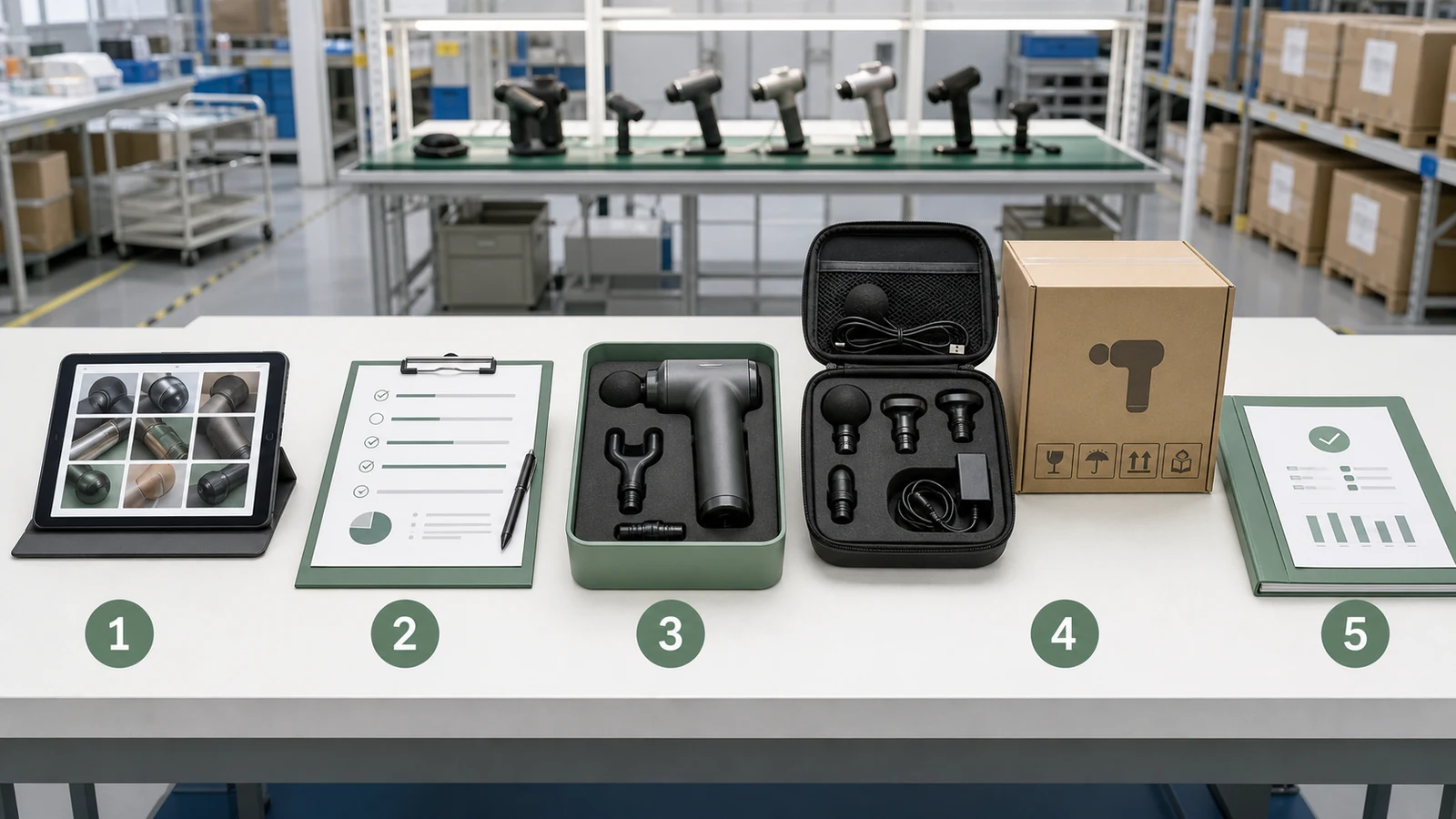
Replacement units and spare parts solve different problems. A replacement unit helps the buyer resolve a customer case quickly. Spare parts help the buyer repair, complete or support units without replacing the whole product. Both can protect margin, but they should be planned separately.
For small ecommerce orders, a few extra units may be simpler than a detailed spare-parts kit. For distributor orders, a spare-parts package can reduce the number of full-unit replacements. For OEM/ODM projects, the buyer may need agreed spare parts because the product configuration is unique to that order.
The right plan also depends on MOQ and repeat order timing. If a custom component has a separate minimum, it may be cheaper to include spare parts in the original production plan than to request them later. The Wholesale Massage Products MOQ guide explains why custom parts and packaging can have their own purchasing constraints.
What a warranty and spare-parts agreement should cover
The agreement does not need to be complicated, but it should answer the questions that usually become expensive after shipment. Put the main terms in the purchase order, order specification or a separate after-sales note that both sides can find later.
| Item to agree | Why it matters | Buyer question to ask |
|---|---|---|
| Warranty period basis | Prevents confusion between shipment date, arrival date, retail sale date and customer claim date. | When does the agreed support period start for this order? |
| Covered defect types | Clarifies whether function, appearance, accessory and packaging issues are handled differently. | Which issues qualify for replacement, parts or further review? |
| Evidence requirement | Reduces slow case handling and repeated requests for missing information. | What photos, videos, labels or batch details are needed? |
| Replacement method | Defines whether the supplier sends parts, replacement units, credit or support in the next order. | How will confirmed cases be compensated? |
| Spare-parts list | Ensures parts are useful for the buyer’s actual service channel. | Which parts can my team realistically use? |
| Freight responsibility | Prevents replacement freight from becoming larger than the part value. | Who pays freight for parts or replacement units? |
| Batch feedback | Turns complaints into improvements for the next production run. | How will repeated issues be reviewed before reorder? |
This table is also useful when comparing quotations. A supplier with a slightly higher unit price but a clearer service plan may create a lower total risk than a cheaper quotation with vague after-sales handling. The Massage Device Wholesale Pricing guide explains why buyers should compare more than the factory unit cost.
Connect after-sales terms with QC before shipment
Warranty planning should not become a substitute for quality control. The best service case is the one the buyer never has to handle. Before shipment, inspection should check the same items that create the most common complaints: function, charging or power behavior, heat, noise, appearance, accessories, labeling and packaging.
If the buyer wants the supplier to accept responsibility for certain defects, those defects should be measurable during inspection where possible. For example, missing accessories, wrong adapter, visible damage and basic functional failure can be checked before shipment. A vague promise that “the product will be good” is weaker than a written inspection checklist tied to the approved sample.
Use the Massage Device Quality Control Checklist together with the after-sales agreement. QC reduces the number of cases; warranty terms define how confirmed cases are handled.
Build a simple after-sales workflow
Buyers do not need a complex service system at the beginning. They need a repeatable workflow that captures enough information, protects customer relationships and gives the supplier useful feedback. The workflow should be simple enough for a sales or customer service team to follow during a busy season.
- Collect the caseRecord model, order, batch, customer description and the sales channel where the complaint appeared.
- Request usable evidenceAsk for short video, product label, package photo or missing-accessory photo based on the issue type.
- Classify the problemSeparate function failure, appearance issue, accessory shortage, packaging damage, misuse question and listing expectation gap.
- Choose the service actionUse the agreed method: spare part, replacement unit, credit, next-order support or further factory review.
- Feed back recurring issuesSummarize repeated cases before the next purchase order so production, packaging or instructions can be improved.
This is where returns data becomes useful. The guide on reducing massage device returns explains how buyers can connect customer complaints with product choice, packaging and listing accuracy.
Watch for weak after-sales assumptions
The time period is stated, but defect scope, evidence, freight and replacement method are not defined.
The buyer receives parts that cannot be used by the service team or do not match the actual complaint pattern.
Complaints cannot be connected to shipment, production date, packaging version or supplier correction work.
The part is low cost, but international freight or local handling makes the solution uneconomical.
A missing cable, failed motor, unclear manual and customer misuse case need different handling.
The same issue repeats because after-sales data never reaches sample approval, QC or production planning.
These gaps are common, and they are fixable. The key is to agree on practical service terms before shipment, not after the buyer is already under pressure from customers or retailers.
What to send Zomarr before shipment
Send the product model, order quantity, sales channel, destination market, expected warranty approach, preferred spare parts, replacement-unit needs and any known complaint pattern from previous sales. If you already have customer service rules, share the evidence format your team can collect.
Zomarr can help buyers review whether the service plan fits the product type, packaging and order size. For deeper product changes or private-label work, review the OEM/ODM Massage Device Manufacturing guide, then submit the requirement through the Contact / RFQ page.
Buyer checklist before shipment
- Define covered defect types and practical evidence requirements
- Confirm warranty timing basis and responsibility boundaries
- Choose useful spare parts for the actual sales channel
- Separate spare parts, replacement units and next-order credit
- Agree who pays freight for parts or replacement support
- Connect service cases with batch, carton and product traceability
- Use QC checks to reduce predictable after-sales problems
- Review recurring complaints before the next order is confirmed
Frequently Asked Questions
What should a massage device warranty agreement include?
It should include the support period basis, covered defect types, evidence requirements, replacement method, spare-parts plan, freight responsibility and how repeated issues will be reviewed.
Which spare parts are useful for wholesale massage device buyers?
Useful spare parts depend on product type and sales channel. Common items may include adapters, charging cables, controllers, removable accessories, fabric parts or selected components that the buyer can realistically use.
Should buyers request spare parts or replacement units?
Both can be useful, but they solve different problems. Replacement units resolve customer cases quickly, while spare parts help repair or complete products without replacing the whole unit.
How can buyers reduce warranty cost before shipment?
Buyers can reduce cost by approving a clear sample, checking packaging and accessories, using a written QC checklist, confirming evidence rules and choosing spare parts that match likely service cases.
How should after-sales data be used for repeat orders?
Recurring complaints should be grouped by issue type and reviewed before the next order. The buyer and supplier can then adjust product specification, packaging, manual, inspection or spare-parts planning.
Plan After-Sales Support Before Shipment
Send the selected model, quantity, channel, destination market and expected service approach. Zomarr can help match warranty, spare parts and QC planning to the actual wholesale order.